Ultrasound Technology Complete Guide: From Sound Waves to 8K HD
The definitive guide to ultrasound technology for expecting parents. Understand how sound becomes images, from 2D clinical to 8K HD. Baby Studio 4D Raleigh.

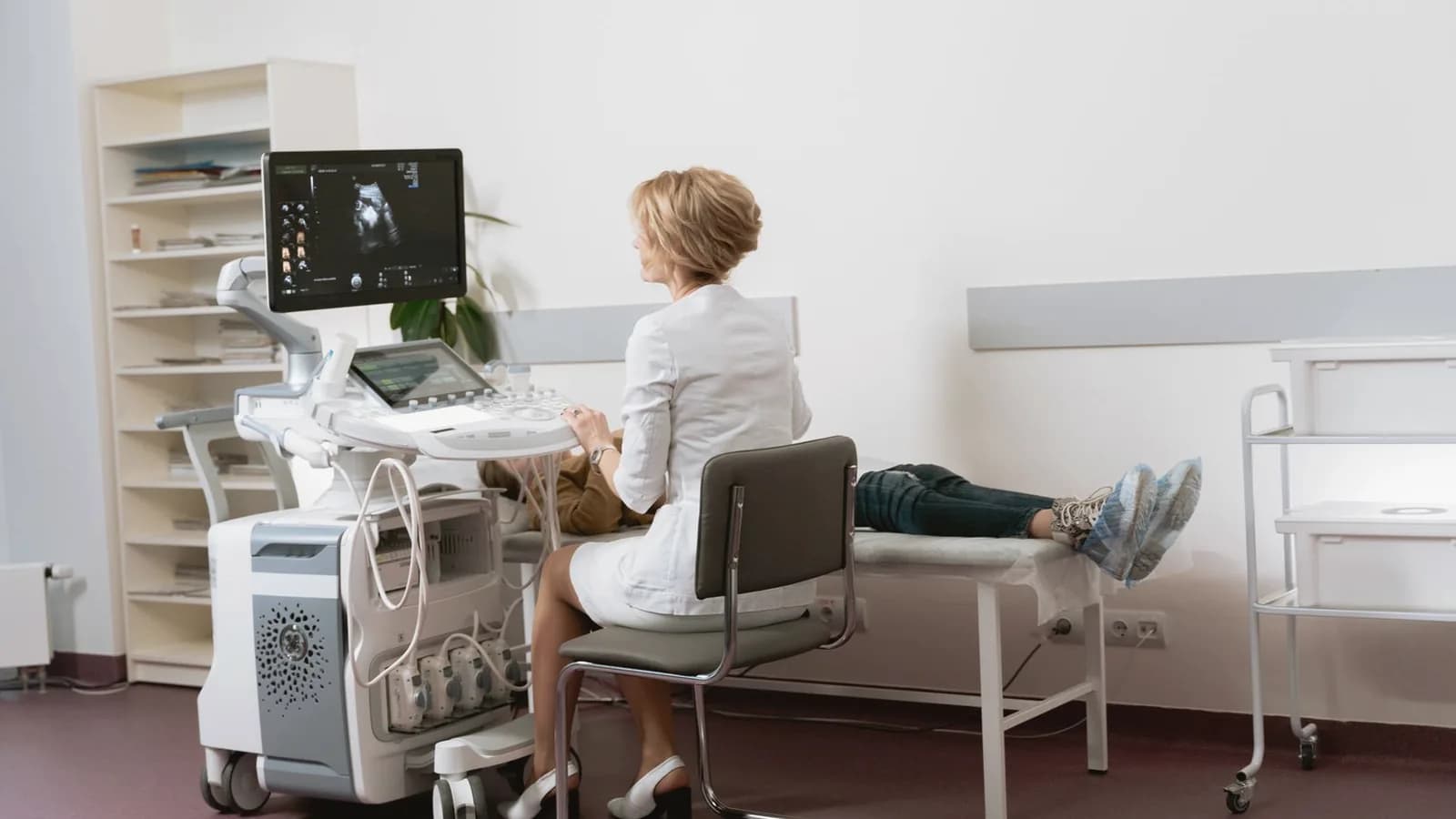
For most expecting parents, ultrasound technology is a bit of a mystery. You lie down, a wand glides across your belly, and suddenly—magically—there’s your baby on a screen. As the founder of Baby Studio 4D in Raleigh, I’ve spent years helping families understand what’s actually happening during those precious minutes. And the truth is, the science behind ultrasound technology is just as beautiful as the images it produces.
This complete guide serves as your roadmap to understanding every facet of modern ultrasound, from the physics of sound waves to the 8K HD imaging we use in our studio today. Whether you’re trying to decide between 2D and 4D, wondering if elective scans are safe, or simply curious about how we see your baby’s first smile, this guide will give you the clarity you deserve.
(Disclaimer: Elective ultrasounds are for keepsake purposes only and do not replace medical care from your OB-GYN or healthcare provider.)
Table of Contents
- The Science of Sound: How Ultrasound Works
- Comparing Dimensions: 2D, 3D, 4D, HD, and 8K
- Medical vs. Elective: Two Different Missions
- Safety, Frequency, and Quality
- The Evolution and Future of the Field
The Science of Sound: How Ultrasound Works
At its heart, ultrasound is an elegantly simple technology: it uses sound waves at frequencies far too high for human ears to hear. The probe sends these waves into your body, where they bounce off tissues, fluids, and your baby, returning to the probe as echoes. The machine then translates those echoes into the images we see on screen.
To really understand what’s happening during your session, explore our guide on how 3D/4D ultrasound works. The “magic” is really just math: a computer interprets millions of echo points per second to build a real-time picture of your baby.
Comparing Dimensions: 2D, 3D, 4D, HD, and 8K
The different “Ds” of ultrasound aren’t just marketing—they represent fundamentally different ways of capturing and rendering your baby’s image.
- 2D: The classic black-and-white “slice” view used for medical measurements.
- 3D: A still, three-dimensional image built by combining many 2D slices.
- 4D: 3D images displayed in real-time (the fourth dimension is time), letting you watch your baby yawn and wave.
- HD: Higher-resolution 3D/4D with improved lighting and skin rendering.
- 8K: The highest tier of resolution, producing hyperrealistic images that look almost photographic.
For a full side-by-side breakdown, see our 2D vs 3D vs 4D vs HD vs 8K comparison guide. If you want to know why we consider 8K a game-changer, our article on what 8K ultrasound technology really means is a must-read.
Medical vs. Elective: Two Different Missions
There’s a lot of confusion around what elective ultrasounds like ours actually do (and don’t do). A medical ultrasound is a diagnostic tool used by your OB-GYN to assess the baby’s health, measure growth, and check for concerns. An elective ultrasound at Baby Studio 4D is a bonding experience—a keepsake moment to see your baby’s face and personality before birth.
We never replace your medical care. In fact, I always encourage our Raleigh families to continue every scheduled appointment with their OB-GYN. What we provide is the emotional companion to the clinical journey.
Safety, Frequency, and Quality
One of the most common questions I hear is: “Is it safe?” The short answer is yes—but understanding why requires a little science. Ultrasound uses non-ionizing sound waves, which means it doesn’t carry the same risks as X-rays or CT scans. Our article on why elective ultrasounds are safe dives into the current 2026 research.
Quality, however, is where things get interesting. Not all ultrasound machines are created equal. The frequency of the probe determines how deep the waves penetrate and how detailed the image becomes. Studio-grade machines like ours use the optimal frequency range for visualizing the baby in the 2nd and 3rd trimester without sacrificing clarity.
First-time parents are sometimes surprised when the baby’s face on a 3D image looks a bit squished or alien-like. This is completely normal! Learn more in our guide on why your baby’s face looks different on 3D ultrasound—hint: there’s nothing wrong with them, it’s just how soft tissue renders when pressed against internal anatomy.
The Evolution and Future of the Field
The ultrasound machines we use today would be unrecognizable to a sonographer from even 15 years ago. In our article on the evolution of ultrasound technology, we trace the journey from grainy 2D scans of the 1970s to the cinematic 8K experiences of 2026.
The most exciting frontier right now is artificial intelligence. AI in ultrasound imaging is revolutionizing everything from image clarity to movement prediction. At Baby Studio 4D, our rendering software uses AI to enhance skin tones and reduce “noise” in real-time, giving you images that truly look like a portrait.
Your Next Step: Experience the Technology
Reading about ultrasound technology is one thing. Watching it bring your baby’s face to life on a 70-inch screen is something else entirely. If you’re ready to see what modern HD imaging can do for your family, we would love to host you.
Head over to our appointments page to book your session at Baby Studio 4D in Raleigh. We’ll handle the science—you just relax and enjoy meeting your little one.
Technology is the tool. The connection is the magic.
Frequently Asked
Is there really a difference between studio 8K and a hospital ultrasound?
Do 3D and 4D use more energy than 2D?
At what week does 8K really shine?
Is AI-enhanced ultrasound available everywhere?
Every milestone
deserves to be
seen clearly.
Bronze
- 2D Ultrasound Session
- Black & White Printed Pictures
- Hear Baby's Heartbeat
- Baby Growth Measurements
Silver
- 2D Ultrasound Session
- Boy or Girl Reveal
- Gender Confirmation
- 3D Image (if baby cooperates)
- Digital Pictures (Momitalk)
Gold
- 3D / HD Ultrasound Session
- Gender Confirmation
- Digital Pictures (Momitalk)
- 5 Color Pictures Printed
- Baby Growth Measurements
Platinum
- 3D / 4D / 5D / HD Session
- Gender Confirmation
- Digital Video & Pictures
- 8 Color Pictures Printed
- Baby Growth Measurements
Mommy Bundle
- Gender Confirmation
- Hear Heartbeat
- 6 Color + Digital Pictures
- Unlimited Digital Video
- 8K Hyperrealistic Image
- Small Bear with Baby's Heartbeat
- Full Baby Growth Report
Gift Card
Choose a package for your loved ones, or for that special someone you want to treat.
Bilingual sonographer based in Raleigh, NC. Six years of experience guiding families through their first 3D, 4D, and 8K HD ultrasound sessions — written here as field notes from the studio.
More from the journal

How a 3D/4D Ultrasound Works: The Science Behind the Magic
Ever wonder how 4d ultrasound works? Discover the fascinating science of sound waves, echoes, and how our stud…

Ultrasound Frequency Explained: Why Studio Quality Matters
Not all 4D ultrasounds are equal. Learn how high quality ultrasound studio equipment and proper frequencies cr…

Medical Ultrasound vs Elective Ultrasound: Key Differences Explained
Confused about medical vs elective ultrasound? Discover the key differences in purpose, technology, and experi…
Ready to meet your baby?
Over 1,000 families have already shared their first moments with us. Yours could be next.
Book your session →